
Rhinoplasty in Dubai
- Home
- Rhinoplasty
AESTHETICALLY ACCENTUATE YOUR NOSE WITH A RHINOPLASTY IN DUBAI
Is your nose crooked or misshapen? Do you have a bulbous nose? Is your nose too big for your face? Is this affecting your confidence? Do you have a deviated septum and difficulty in breathing? If such issues are of concern to you, you could consider getting a Rhinoplasty in Dubai.
Rhinoplasty, also referred to as nose job, nose reshaping surgery, or cosmetic nose surgery, is a nose correction surgery done for aesthetic or medical reasons.
Beautifully done Rhinoplasty is a very precise art. It is an artistic engineering marvel – one that provides a beautiful, yet natural looking nose that is near-perfect harmony with your other facial features. While adding aesthetic appeal, it should never compromise your nose functionality.
At our state-of-the-art plastic surgery clinic in Dubai, our experienced Rhinoplasty in Dubai surgeons use ultra-modern equipment and techniques to provide you with naturally appealing results from your Nose Job Dubai procedure that can significantly enhance the shape and size of your nose, or correct and restore its functionality.
Rhinoplasty in Dubai FACTS AT A GLANCE
Procedure Type
Surgical
Anesthesia
IV Sedation/ General Anesthesia
Duration
1-3 Hours
Recovery Period
2 Weeks
WHY CHOOSE HASAN SURGERY FOR YOUR RHINOPLASTY IN DUBAI?
- A Rhinoplasty is a facial contouring surgery. Great, natural-looking, and long-lasting results from such surgeries requires a plastic surgeon who has an acute grasp of facial anatomy, and also prioritizes your safety. A skilled Rhinoplasty surgeon in Dubai is a facial contouring expert with extensive experience to perform the surgery successfully without it looking unnatural. And in that respect, our surgeon is highly accomplished surgeon for Rhinoplasty in Dubai.
- Our clinic – Hasan Surgery – is located in Dubai, UAE in the prestigious Dubai Healthcare City (DHCC). True to our founder Dr. Hasan Ali’s desire for excellence, Hasan Surgery is a highly modern, cosmetic surgery clinic in Dubai. It is set up as an Ambulatory daycare surgical facility.
- Hasan Surgery is an AAAASF-accredited plastic surgery clinic in Dubai since 2016 – the global gold standard for accreditation of outpatient surgical facilities. The accreditation acknowledges the clinic’s high standards and latest technology and its focus on patient safety.
- Hasan Surgery is a plastic surgery clinic committed to the highest standards of quality and patient safety.
- Our Surgeon is a renowned trainer of plastic surgeons and examiner at various levels of training for plastic surgeons.
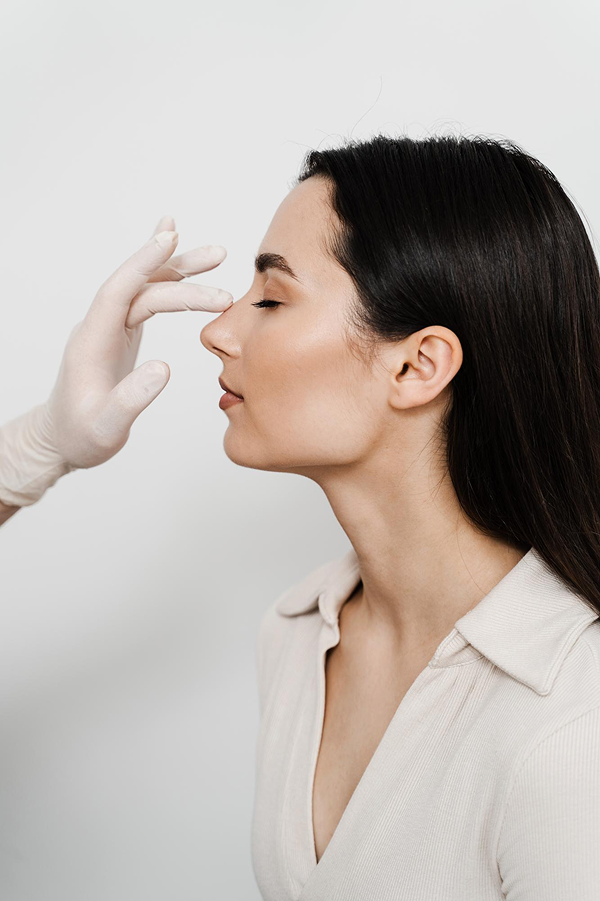
BEFORE / AFTER GALLERY - Rhinoplasty in Dubai
As per Dubai/ UAE regulations, we are not permitted to show images without written patient consent. The below before/after images are with patient consent. For this procedure, we have a vast collection of before/after images, but those have not been consented to by our patients for public display. We would be delighted to show you our results during your initial consultation. We encourage you to ask our surgeons for the same during the consultation.

ENHANCE YOUR FACIAL HARMONY
The shape and size of the nose play an important role in overall facial balance. Whether you want to refine the appearance of your nose or improve breathing concerns, rhinoplasty in Dubai is designed to enhance both form and function while maintaining natural-looking results that complement your facial features.
At Hasan Surgery, every rhinoplasty procedure is carefully planned around your facial anatomy, personal goals, and functional needs. Dr. Hasan Ali takes a personalized approach to achieve balanced, natural-looking outcomes while prioritizing your safety, comfort, and a smooth recovery.
✓ Refines the shape and proportion of the nose
✓ Improves facial balance and harmony
✓ Personalized treatment tailored to your aesthetic and functional needs
✓ Comprehensive care before, during, and after surgery
FAQ
Rhinoplasty in Dubai FAQs
Rhinoplasty, often called a nose job, is a surgery to reshape and resize your nose. It is one of the most common of all cosmetic surgeries for men and women, and teenagers too. It is performed to increase or decrease the size of the nose; and correct the shape of the nostrils, the nose tip, and the bridge of the nose. It can also correct the angle between the nose and the upper lip which leads to more aesthetic facial proportions and symmetry.
While often performed for aesthetic reasons outlined above (cosmetic Rhinoplasty), Rhinoplasty is also undertaken for medical reasons (functional Rhinoplasty) – for example, to correct defects such as a deviated septum and to make breathing easier. Such defects could be from birth or due to an injury.
Our nose is one of our most defining facial features and a focal point. It therefore stands to reason that it attracts attention and is key to our perception of beauty. If the size or shape of our nose isn’t symmetrical or in harmony with the rest of our facial features, it can greatly affect our self-esteem. Even a slight improvement in our nose boosts our overall confidence and enhances our appearance.
Rhinoplasty in Dubai, also known as a Nose Job Dubai, is usually done under general anesthesia, but some of the procedures can be done under sedation depending on the technique being used, type of correction needed, and other relevant factors. During the surgery, your plastic surgeon will mark your nose and make incisions from where the adjustments are to be done.
Depending on the Rhinoplasty in Dubai technique being used – i.e. Closed Rhinoplasty or Open Rhinoplasty – the incision may be inside the nostrils, or at the bottom of the nose between the nostrils. Through the incisions, the surgeon lifts the underlying skin and tissue, adds, reshapes or removes cartilage, adds or removes the bone, or adjusts and reduces the septum – thereby reshaping, increasing, decreasing, shortening, or lengthening the nose (including nostrils). When additional bone or cartilage is needed to correct the nose as desired, this is taken from the rib, hip, or ear (referred to as Augmentation Rhinoplasty). Once done, the skin is pulled back into position and the incisions are closed. The result of a Nose Job Dubai is a more chiselled, symmetrical, shapelier, and functional nose.
Rhinoplasty is indicated for adult (or teenaged) males or females who have a hump on the bridge of their nose, enlarged or bulbous nasal tip, enlarged or very narrow nostrils, crooked or broken nose, or those needing other similar aesthetic adjustments to the size, shape, and position of their nose; or wanting to correct breathing issues due to problems with the septum. Rhinoplasty in Dubai, also known as a Nose Job Dubai, is a popular choice for patients seeking both cosmetic enhancement and improved nasal function.
The ideal candidate should be a generally healthy person. He or she should not have any medical condition that could interfere with the healing of the wound before undergoing Rhinoplasty in Dubai.
Prior to ensuring your candidature for the Rhinoplasty, your plastic surgeon will review your medical history and past and present health condition. You will have to discuss the medication you are on, including any herbal supplements, to determine if you are a suitable candidate for a Nose Job Dubai.
As a possible Rhinoplasty candidate, you must have realistic expectations about your resultant appearance after the procedure. You must stop smoking prior to the surgery and after the surgery, as tobacco can slow down the blood flow to the skin and thereby slow down the healing process for Rhinoplasty in Dubai.
The surgery will show desirable results only on people who are generally healthy and do not have any previous history of having cardiac issues, pulmonary emboli, excessive bleeding, seizures, immunodeficiency disorders, or deep vein thrombosis. People with such conditions are discouraged from undergoing this procedure due to a higher risk of surgical complications.
People who are on certain anti-inflammatory and anticoagulant drugs are also discouraged from undergoing a Rhinoplasty surgery or Nose Job Dubai.
Yes, it is. Unlike most other cosmetic surgeries, Rhinoplasty is frequently and safely performed for teenagers. The natural growth of our nose typically stops after the age of 16, so Rhinoplasty done for teenagers will retain its results throughout their life. We usually recommend the minimum Rhinoplasty age for girls as 14 years, and for boys as 16 years.
Rhinoplasty in teenagers can provide them a stronger sense of self-esteem. Doing a functional or revision Rhinoplasty in the teenage years can provide them earlier relief from breathing issues.
It is important to note though that changes due to weight fluctuations, gravity, injury or illness can change the nose shape in future.
The septum is the narrow band of cartilage in the middle of our nose that divides our nose and nostrils into two halves. When a person has a deviated, bent, or crooked septum, it can cause issues with breathing. Correcting the septum to restore its functionality is done via a Septoplasty. The focus in Septoplasty is not on the aesthetics of the nose, rather on the functionality, though it could happen that correcting the septum delivers some aesthetic improvement too.
A Septorhinoplasty combines a Septoplasty which focuses on the functional improvement with a Rhinoplasty that focuses on the aesthetic improvement. In many cases, when a Septoplasty is done, some bit of aesthetic adjustment is also needed to the nose to ensure that the balance of the nose is maintained after the procedure. This is addressed via a Rhinoplasty. When both these procedures are done together, it is called Septorhinoplasty.
There are two main techniques for performing Rhinoplasty in Dubai. The techniques vary with regards to incision patterns, tools used, and the procedure methodology. These are:
Closed or Endonasal Rhinoplasty: This is the preferred technique as the incisions are made inside the nose and there is no visible scarring. While providing lesser access to the nose than an Open Rhinoplasty, the Closed Rhinoplasty still allows the Rhinoplasty surgeon to make most of the needed corrections for a Nose Job Dubai procedure.
Open Rhinoplasty: This technique is used when the Rhinoplasty surgeon needs greater access to the nasal structure than is provided by the Closed Rhinoplasty. The incision is made at the bottom of the nose between the nostrils (in the columella). This allows the surgeon to lift the skin from the nasal tip and make the desired adjustments to the bone and cartilage. Upon complete healing, this technique leaves a tiny, nearly invisible scar under the nose.
The technique of Rhinoplasty in Dubai used for you will be determined by your surgeon, taking into consideration your facial anatomy, the type and extent of correction needed, aesthetic considerations, and other relevant factors to achieve the best Nose Job Dubai results.
At our clinic in Dubai, Rhinoplasty in Dubai is mostly performed under IV sedation. If needed to be performed under general anesthesia, it is done at an accredited hospital in Dubai.
Most people are able to resume normal activities within 10-14 days. We recommend you schedule at least 2 weeks off from work after your Rhinoplasty surgery. The complete healing and recovery after the surgery will need more time.
Take note that even after 2 weeks off, you might be required to avoid specific activities until you are fully recovered. Light exercises can be started after 3 weeks. For people whose work involves strenuous physical activities, you’ll need to wait 4-6 weeks before resuming your normal activities.
Most patients experience pain and discomfort after the surgery when anesthesia effects diminish. You will start to feel comfortable after 2–3 days following your Rhinoplasty in Dubai.
Immediately after the Nose Job Dubai procedure, the incision locations will look red, bruised, uneven, swollen, or discolored, and scarring will also be visible if done as an Open Rhinoplasty. It is normal to feel some loss of sensation in the treated areas after the Rhinoplasty. This temporary numbness usually goes away once the part is completely healed.
You will be prescribed antibiotics to avoid infection. During your 2 weeks week of recovery, you can expect issues with pain and bruising. The pain is managed with prescribed medications and the bruising through cold compresses. You should get plenty of rest during this time.
After the first week of recovery, it is necessary to do a follow-up visit with your plastic surgeon to monitor your progres and to check the incision sites.
You should sleep with your head elevated until the swelling subsides. For the first 4 weeks, avoid driving, stretching, bending, lifting, blowing your nose, excessive nasal movements, sun exposure, vigorous brushing, wearing glasses, or wearing clothes that need to be pulled down going over the nose after your Rhinoplasty in Dubai.
After this period, you will have recovered enough to return to your normal routine as long as it does not involve strenuous physical activity. Pain and major bruising and swelling will have subsided, though the complete swelling might take up to a year to subside after your Nose Job Dubai procedure.
It is advised to stay away from all intense physical and athletic activities for at least 4–6 weeks after the surgery.
It is still best to do follow-up visits with your plastic surgeon for continuing post-surgical care after your Rhinoplasty in Dubai.
Rhinoplasty in Dubai results are permanent when performed on a mature nose.
However, the aging process, weight changes, injury, or illness can change your treated features in the future. Protecting yourself from sun exposure, following a proper skincare routine, and maintaining a healthy weight are recommended to maintain your results longer.
For best results, strictly follow the care instructions of your plastic surgeon, prior to, and in the aftermath of the surgery.
About
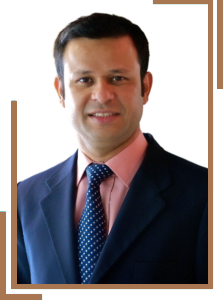
Dr. Hasan Ali
Consultant Plastic, Reconstructive & Aesthetic Surgeon
Founder & Medical Director — Hasan Surgery, Dubai Healthcare City
MBBS · MSc Aesthetic Plastic Surgery (Univ. of London) · MRCS (UK) · EBOPRAS (France) · FICS (USA)
20+
Years Experience
10,000+
Contouring Surgeries
2007
VASER Pioneer
Dr. Hasan Ali is recognised as one of the leading body-contouring and VASER liposuction surgeons in Dubai and the UAE, specialising in body lift surgery, 360° contouring, and high-definition body sculpting. He has trained dozens of plastic surgeons in advanced VASER techniques, serves as an international surveyor for AAAASF, and holds active surgical licences across the UK, Ireland, UAE, Saudi Arabia, and Pakistan. His research is indexed on Google Scholar.
Dr. Hasan Ali is an esteemed member of several prestigious international organisations, including the International Society of Aesthetic Plastic Surgery (ISAPS), Emirates Plastic Surgery Society (EPSS), American Society of Plastic Surgeons (ASPS), International College of Surgeons (ICS), American Academy of Cosmetic Surgery (AACS), British Association of Plastic, Reconstructive and Aesthetic Surgeons (BAPRAS), Hair Restoration Surgery Professionals (HRSP), and the Royal College of Physicians and Surgeons of Glasgow. These affiliations reflect his commitment to maintaining the highest standards of patient safety, innovation, and excellence in aesthetic and reconstructive surgery.