
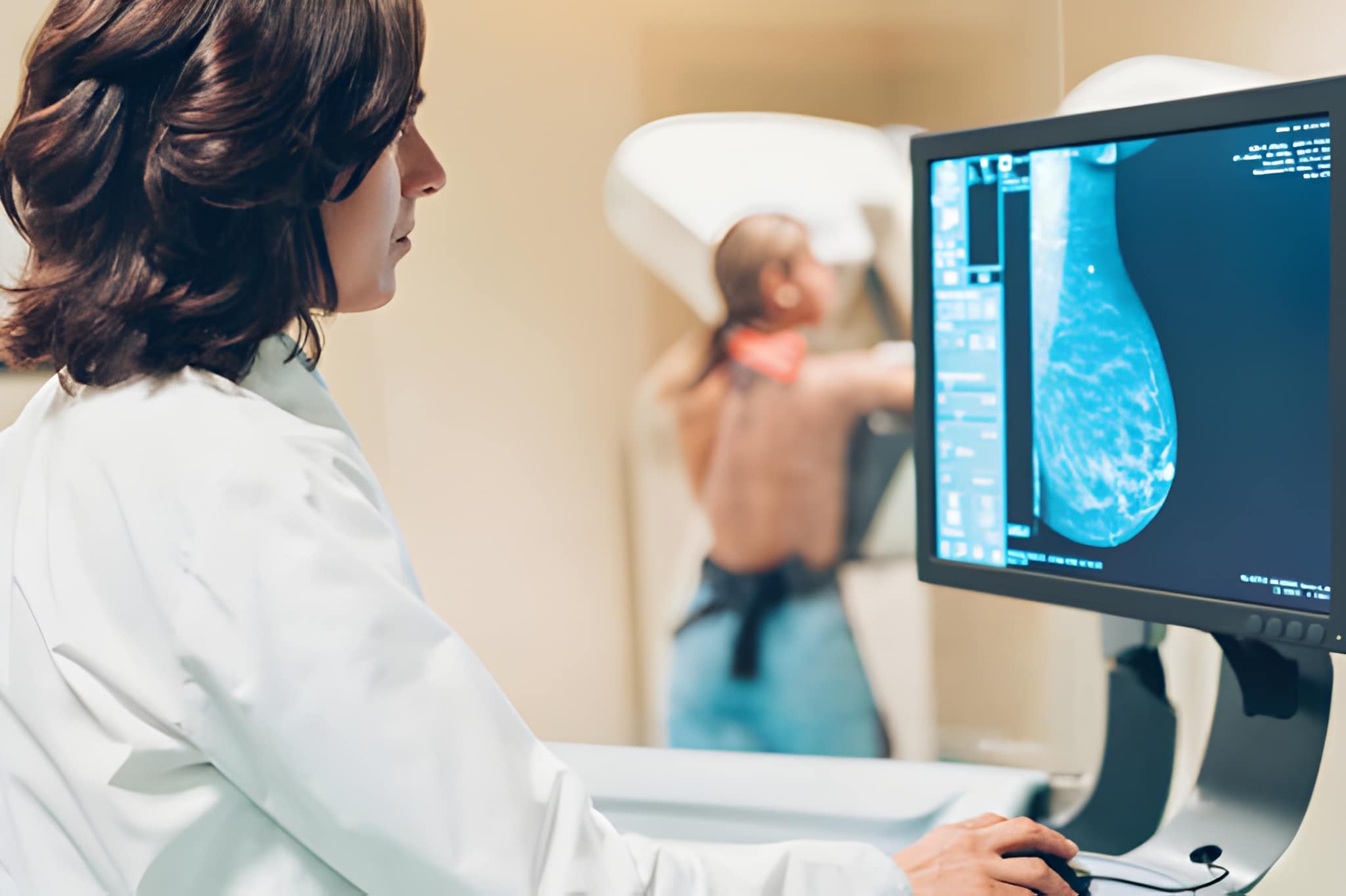
If you have breast implants, it is completely normal to feel uneasy before a screening. Mammograms use brief, firm compression, which raises a common concern: can a mammogram pop breast implants?
A mammogram with implants is generally safe, and implant rupture during mammography is rare. Still, rare does not mean impossible, which is why technique, facility experience, and clear communication matter.
This blog explains what to expect from a mammogram with breast implants, how radiology teams reduce risk, what can make the exam more uncomfortable, and what to do if you notice changes afterward.
A mammogram is an X-ray test designed to detect early breast changes, including signs of cancer. Compression is an integral part of the process because it spreads tissue, reduces motion, and enhances image clarity.
With implants, the goal remains the same, but the examination is conducted differently. Implants can block parts of the breast tissue on X-ray, so technologists take extra views and use special positioning to visualize more tissue. That is also why it is important to book your exam at a center that routinely performs mammograms with breast implants.

The practical truth
Why rupture can happen
When a rupture occurs during or after a mammogram, it is often because the implant shell was already weakened. This can be related to implant age, natural wear, folds in the shell, prior trauma, prior surgeries, or tight scar tissue around the implant (capsular contracture). Sometimes the mammogram is simply the moment a developing issue becomes noticeable.
Most facilities use extra images called implant displacement views (often called the Eklund technique). In simple terms, the technologist gently pushes the implant back toward the chest wall and pulls the breast tissue forward, allowing more of your natural breast tissue to be seen clearly.
Step | Standard screening | Mammogram for breast implants |
Images taken | Usually two views per breast | Standard views plus additional implant displacement views |
Compression | Firm, brief | Often adjusted carefully so breast tissue is compressed while the implant is moved back |
Time | Short | Usually longer due to extra images |
Visibility | Easier to see full breast tissue | Some tissue can be obscured unless implant displacement views are done |
The procedure of a mammogram with a breast implant is done with the following steps:
Moment | What happens | What you can do |
Booking | The center notes you have implants | Ask for a facility with implant experience |
Arrival | You confirm implants again | Mention pain, tightness, or prior capsular contracture |
Imaging | Standard views plus extra views | Speak up if discomfort feels sharp or unusual |
After | Mild soreness can occur | Wear a supportive bra, use simple pain relief if approved |
The imaging approach is broadly similar for both. The radiology team employs the same meticulous positioning and additional views for both silicone and saline implants.
Where it can differ is how rupture is noticed:
Discomfort Guide after Mammograms with Implants
Some discomfort is expected because compression presses on breast tissue, and scar tissue can increase sensitivity.
Symptom | Often normal | Needs assessment soon |
Mild soreness for 24 to 48 hours | Yes | No |
Brief sharp discomfort during positioning that improves when adjusted | Sometimes | If it does not improve |
New swelling or increasing tenderness | No | Yes |
Sudden shape change or new asymmetry | No | Yes |
Visible deflation (possible saline rupture) | No | Yes |
New lump, skin dimpling, nipple discharge | No | Yes |
If you have a history of capsular contracture or significant tightness, please notify the imaging team prior to the exam. In some cases, the exam can be more uncomfortable or more difficult to perform, and the technologist may need extra time and careful positioning.
Mammograms use low-dose radiation. For most women, the benefit of early detection outweighs the small exposure risk. Skipping screening is far more risky than the radiation involved in the test.
Implants can obscure tissue, but implant displacement views and skilled positioning improve visibility. Mammography still plays an important role in breast cancer screening.
Many women can still have 3D mammography (tomosynthesis). The decision depends on the facility’s equipment, your breast tissue, and your doctor’s recommendations.
Eligibility and Screening Guidance
In most cases, screening recommendations are based on your age and personal risk factors, not on whether you have implants.
If you had implants placed for reconstruction after breast cancer surgery, screening needs can differ depending on the type of surgery and whether breast tissue remains. Your breast team can guide an individualized plan.
Breast Cancer Screening with Implants
If an abnormality is seen on a breast implant mammogram, the next steps are similar to patients without implants:
Implants can affect imaging angles and planning, but they do not prevent diagnosis or treatment when managed by an experienced team.
Safety-first Checklist for a Better Mammogram with Breast Implants
Do this | Why it helps |
Tell the center you have implants when booking | Ensures the correct appointment type and skilled staff |
Choose a facility that routinely images implants | Improves technique and reduces repeat imaging |
Mention capsular contracture, tightness, or prior pain | Allows gentler positioning and better planning |
Schedule when breasts are least tender | May reduce discomfort |
Skip deodorant or powders that day | Reduces image artifacts |
Ask about nipple piercing and mammogram prep | Jewelry may need removal to avoid artifacts and discomfort |
Common Implant-Related Concerns During Mammography
Concern | What it means | What reduces risk |
Rupture fear | Implant shell damage during compression | Experienced center, implant displacement views, and clear communication |
Missed tissue | An implant blocks some breast tissue on an X-ray | Extra images and correct technique |
Pain | Compression plus scar tissue sensitivity | Scheduling when less tender, notifying the technologist, and slow positioning |
Capsular contracture | Tight scar capsule around the implant | Inform the center early, consider a clinical review if severe |
If you have ongoing worry about screening after breast augmentation, or you suspect a problem such as rupture, implant shift, or capsular contracture, you need a proper clinical assessment, not guesswork.
Hasan Surgery is located in Dubai Healthcare City (DHCC) and is founded and led by Dr. Hasan Ali, a reconstructive and plastic surgeon known for a meticulous approach and strong safety standards. The clinic has been QUAD-A accredited in the UAE since 2016 and functions as an ambulatory day surgical center.
An in-person evaluation can help clarify:
Do Not Skip the Mammogram, Upgrade the Plan
Breast implants should never be a reason to delay or avoid breast cancer screening. The right technique, the right imaging center, and the right medical guidance make all the difference.
If you have concerns about implant safety, discomfort during mammograms, or changes in your breasts, a professional evaluation can bring clarity and confidence to your next step.
If you have persistent pain, tightness, sudden breast changes, or worry about implant integrity, get a proper clinical evaluation and schedule a consultation with Dr. Hasan Ali today.
Yes. A mammogram with breast implants is routinely performed with extra views.
Yes. You can have a mammogram and implants safely, especially at a center experienced with implant imaging.
It is possible but rare. This risk should not stop you from screening.
They use standard views plus implant displacement views to pull breast tissue forward.
Please inform the facility when you book and confirm again upon arrival to ensure the correct technique is used.
Follow your surgeon’s advice. Many women return to routine screening based on their age and risk, once they have fully healed.
The technique is similar, but silicone ruptures can be silent and may need ultrasound or MRI if suspected.
Mild soreness for a day or two can be normal. Severe pain, swelling, or shape changes need evaluation.
No. Mammograms use low-dose radiation, and early detection benefits generally outweigh risks.
Tell the imaging center ahead of time. You may need to remove jewelry to avoid artifacts and discomfort.
A breast implants mammogram is a screening mammogram performed with special positioning to visualize breast tissue around the implants.
Yes. A mammogram breast implants exam includes additional implant displacement views to improve tissue visibility.
With trained technologists, mammogram and breast implants imaging is done by moving the implant back and focusing compression on breast tissue.
The risk is low. Breast implant rupture during a mammogram is rare, especially when proper techniques are used.
Mammograms and breast implants screening involves standard views plus extra images to reduce tissue obstruction by the implant.
Mammography implant techniques refer to specialized positioning methods, such as implant displacement views, used during imaging.
Yes. A silicone implant mammogram is considered safe, though silicone ruptures can be silent and may need an ultrasound or an MRI if suspected.
It can happen, but it is uncommon. Most reported ruptures are linked to weakened or older implants rather than compression alone.
Yes. You can get a mammogram with implants at imaging centers experienced in implant screening.
Yes. Women with breast implants should follow routine screening guidelines unless advised otherwise by their doctor.
Yes. You can do a mammogram with implants safely when the imaging team is informed in advance.
Yes. You can do mammogram with breast implants once healing is complete, based on age and risk factors.
Yes, but you should inform the imaging center so positioning can be adjusted for comfort and safety.
Yes. A woman with breast implants can have routine mammograms as recommended for her age and risk profile.
Breast cancer mammogram with implants detection relies on extra imaging views and, if needed, additional tests like ultrasound or MRI.
If you get breast cancer with implants, diagnosis and treatment proceed with tailored imaging and surgical planning, without delaying care.
