
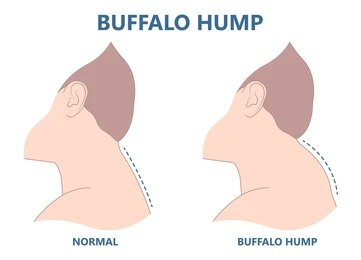
Know the Hump. Understand the Cause. Take Control.
Noticing a hump on the back of your neck can be confusing and even distressing. Many people worry about their appearance, posture, or underlying health when they discover a Buffalo Hump. The good news is, you are not alone, and in many cases, this condition is manageable with the right understanding and care.
At Hasan Surgery, led by Dr. Hasan Ali, patients are guided with compassion, clarity, and personalized solutions. This blog helps you understand what a buffalo hump is, why it happens, and the different types, so you can take informed steps forward with confidence.
A buffalo hump refers to a visible fat pad on the back of the neck, medically known as a dorsocervical fat pad or cervical fat pad. It appears as a rounded or firm swelling at the junction of the neck and upper back.
People may describe it as:
Simply put, a buffalo hump is an abnormal fat pad neck accumulation that changes the natural contour of the upper spine.
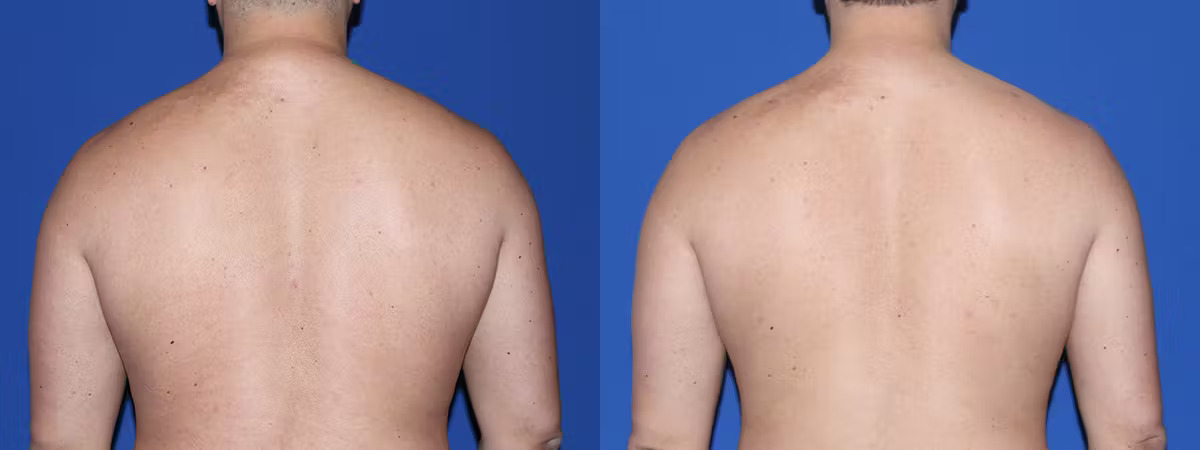
In medical terms, a hump refers to an abnormal bulge or elevation.
This can be due to:
The hunchback meaning in body often relates to spinal curvature, while a neck hump is more commonly linked to soft tissue or fat buildup.
Many people confuse these two conditions.
Dowager’s Hump | Buffalo Hump
|
|
|
Understanding dowager’s hump vs buffalo hump is essential because the treatment approach differs significantly.
A buffalo hump may be seen in people with:
It is not a disease by itself, but it can be associated with certain health conditions.
Let’s explore what causes buffalo hump in a simple, clear way.
Hormones play a major role in fat distribution.
A steroid hump is commonly seen in people using long-term corticosteroids.
Excess weight can result into fat neck hump formation, especially in genetically prone individuals.
Prolonged screen use and slouching can worsen:
Certain conditions are linked to buffalo hump disease, including:
Medically, a buffalo hump may be referred to as:
These terms describe the same condition, fat accumulation at the upper spine.
Understanding the types of buffalo hump helps in choosing the right care approach.
A buffalo hump may cause:
It usually does not cause pain, but the emotional impact can be significant.
A common question is: buffalo hump – Is it reversible?
The answer is – often, yes.
Reversibility depends on:
Early assessment leads to better outcomes.
You should consider expert evaluation if:
At Hasan Surgery, Dr. Hasan Ali focuses on identifying the root cause before suggesting any intervention.
Treatment depends on the cause and type of buffalo hump.
Options may include:
Dr. Hasan Ali believes in personalized treatment, not one-size-fits-all solutions.
Living with a buffalo hump can feel frustrating, but it does not define you. With proper diagnosis and expert care, improvement is possible.
However, getting the right information from a trusted expert matters a lot.
With years of experience and a patient-focused approach, Dr. Hasan Ali at Hasan Surgery helps individuals identify the true cause of a buffalo hump and understand the options available for managing it effectively. Whether it is related to hormonal changes, posture, lifestyle factors, or fat accumulation, expert guidance makes all the difference.
If you’ve been wondering “what is neck hump?” or “why do I have fat on the back of my neck?”, know that answers and solutions are available.
